 Contact Client Services via Whatsapp


Why Exotics Command a Premium
Exotic skins cost meaningfully more than standard calfskin for reasons that go beyond brand markup. The animals themselves take longer to reach usable size, skins are smaller than cattle hides so more are needed per piece, and cutting around a skin's natural scale pattern to match seams and avoid waste requires considerably more skilled handwork than cutting a large, uniform calfskin hide.
Regulation adds another layer: crocodile and alligator skins used in genuine luxury goods are required to carry CITES (Convention on International Trade in Endangered Species) documentation confirming the skin came from a legally farmed or harvested source, which is itself a cost and complexity most standard leathers never have to account for.
Telling Crocodile From Alligator
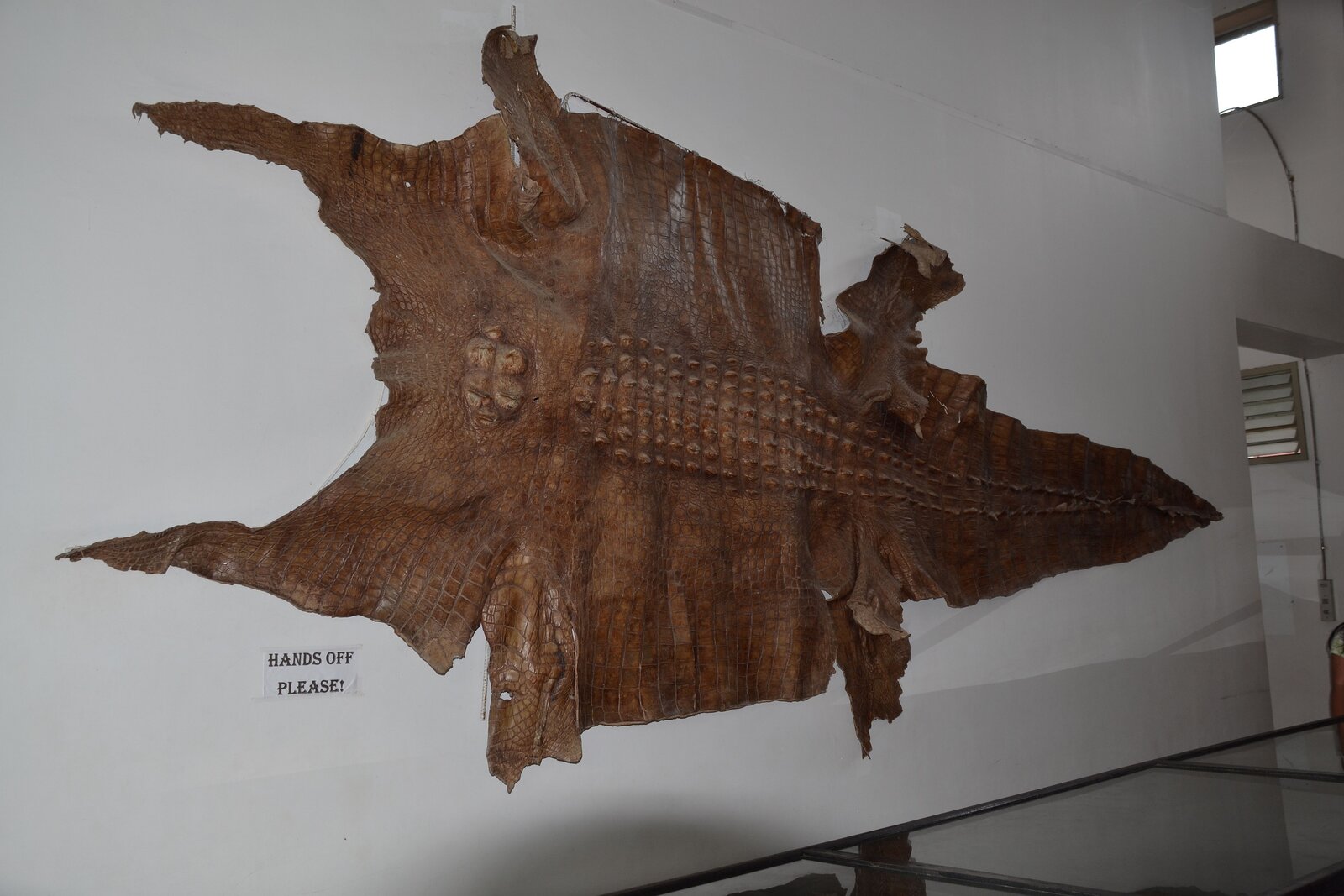
These two are the most frequently confused exotic skins, and the fastest tell is the scale pattern itself. Alligator scales are generally smaller, more uniformly rectangular, and arranged in straighter rows. Crocodile scales are typically larger and less uniform in shape, and — this is the most reliable single tell — show small sensory pits (tiny pore-like dots) on each scale, which alligator skin does not have.
The belly is also where these skins are cut from for the finest goods, since it's the flattest, most evenly scaled part of the animal; a raised, ridged "hornback" texture belongs to a different, lower grade cut from the animal's back.
Look for the small sensory pits on each scale — that single detail is the most reliable way to tell crocodile from alligator.
Our Material SpecialistsOstrich: The Quill-Bump Skin
Ostrich leather is immediately recognizable by its distinctive raised quill bumps — the follicle points where the bird's feathers once grew, arranged across the hide in a naturally irregular, goose-bump-like pattern. No two ostrich hides have quite the same bump arrangement, which makes each finished piece genuinely one of a kind in its surface texture.
It's also notably supple and flexible for an exotic skin, which is why it shows up often in softer-structured bags and smaller leather goods rather than only rigid, boxy silhouettes.
Lizard: Fine and Lightweight
Lizard skin is the smallest and most delicate of the four, with a fine, dense scale pattern and a naturally lightweight feel. Because usable lizard skins are small, lizard leather goods are typically limited to smaller accessories — wallets, card cases, watch straps — rather than full-size handbags, where piecing together enough matched skin becomes impractical.
Its fine scale detail is genuinely difficult to replicate convincingly in a printed imitation, which makes it one of the more reliably self-authenticating exotic textures on close inspection.
| Skin | Key Identifier | Typical Use |
|---|---|---|
| Alligator | Small, uniform rectangular scales, no pits | Structured bags, boxy silhouettes |
| Crocodile | Larger, irregular scales with visible pits | Structured bags, watch straps |
| Ostrich | Raised quill-bump follicle pattern | Softer bags, smaller leather goods |
| Lizard | Fine, dense, small uniform scales | Wallets, card cases, straps |
Care Considerations
All four exotics are more sensitive to humidity and dryness swings than standard calfskin, and all benefit from professional conditioning rather than home products — the wrong conditioner can dull or discolour exotic finishes in ways that are difficult to correct.
Crocodile and alligator scales can lift or crack at the edges if allowed to dry out completely; ostrich's raised quill bumps are more prone to surface scuffing than the smoother areas around them and deserve extra care when the piece is set down or stored.
Frequently asked questions
Generally, yes, though pricing depends heavily on skin size, scale uniformity and grade within each species, not species alone.
Most core colourways are achievable, though the raised quill bumps can take dye slightly differently than the surrounding skin, which is part of the material's natural character.
Skin size limits piece size — a larger bag would require piecing multiple skins together, which is avoided in the finest work to keep scale patterns consistent.
It's more delicate than calfskin or crocodile, which is exactly why it's typically reserved for smaller accessories rather than everyday-carry bags.
Regulated species like crocodile and alligator do. Ostrich and most lizard species used commercially are generally not CITES-regulated, though sourcing documentation is still good practice.