 Contact Client Services via Whatsapp


A House Founded on a Marriage
Van Cleef & Arpels was founded in Paris in 1896, formed through the marriage of Estelle Arpels, daughter of a precious stone dealer, and Alfred Van Cleef, whose family was in the jewelry trade. The combined family expertise in stones and jewelry craft became the foundation of the house, which opened its first boutique in Place Vendôme, Paris, in the early 1900s — a location still closely associated with the world's most established fine jewelry houses.
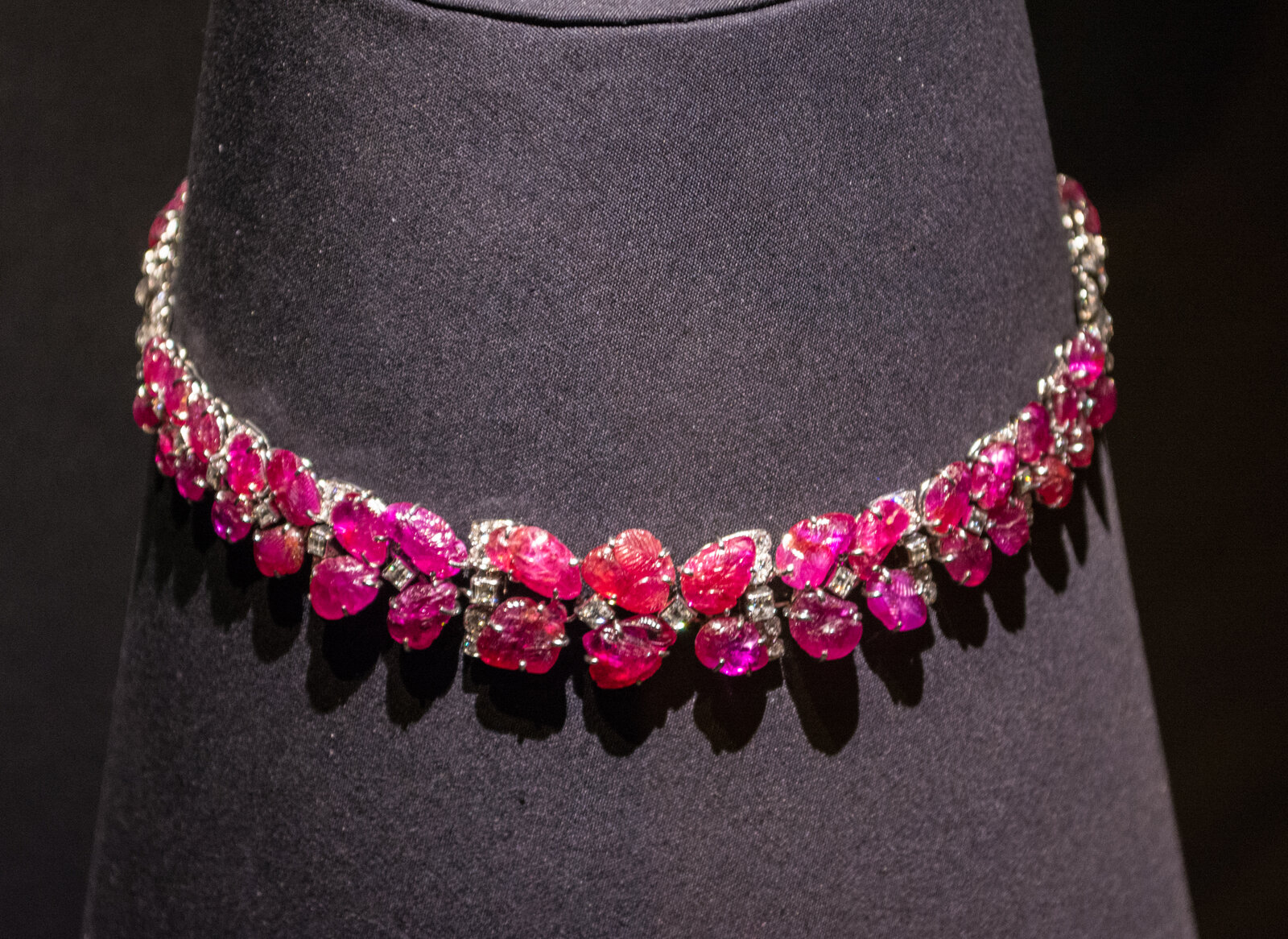
The house built its early reputation on intricate, technically demanding jewelry work, including the "Mystery Setting" technique it patented in the 1930s, which conceals the metal prongs holding gemstones so that the stones appear to float with no visible support — a genuinely difficult technique still closely associated with the house today.
The Alhambra's 1968 Introduction
The Alhambra collection was introduced in 1968, built around a single, repeating four-leaf clover motif rendered in various stones and finishes, most iconically strung together as a long sautoir necklace. It was, by design, a more accessible entry point into the house's jewelry compared to its one-of-a-kind high-jewelry pieces, built for everyday wear rather than occasional formal use.
That accessibility, paired with instant visual recognizability, is a large part of why Alhambra became the house's single most enduring and widely recognized design, arguably outshining even its intricate high-jewelry work in terms of public familiarity.
The Mystery Setting hides the metal entirely, so the stones appear to float. It remains one of the most technically demanding settings in fine jewelry.
Our Heritage DeskWhat the Four-Leaf Motif Represents
The four-leaf clover carries an established folk association with luck, and the house has leaned into that symbolism as part of the collection's identity since its introduction. Each clover motif is typically finished with a beaded or twisted gold edge framing the central stone or mother-of-pearl inlay, a detail consistent across the collection's decades of variations.
The motif's simplicity is deliberate: unlike more elaborate high-jewelry pieces, Alhambra pieces are designed to be worn layered, stacked, or on their own, giving the line genuine everyday versatility that most fine jewelry collections of similar prestige don't attempt.
Reading Alhambra Size Variants
Over the decades, the house introduced several size variants of the same core motif: the original Vintage Alhambra size, a smaller "Sweet Alhambra," and a still-smaller "Magic Alhambra" featuring irregularly-sized clovers rather than uniform repeating ones. Knowing which size variant a piece belongs to is useful for identifying it accurately, since the collection spans multiple simultaneous product lines built on the same underlying motif.
This is a common area of confusion for buyers new to the house: "Alhambra" alone describes a motif family, not one single fixed product, so two genuinely different pieces can both be accurately called "Alhambra" while differing significantly in size and price point.
Stone and Material Choices
Alhambra pieces have been produced across a wide range of materials over the decades — mother-of-pearl, malachite, onyx, carnelian, tiger's eye, and various coloured gemstones, alongside plain polished gold versions. Certain stone-and-metal combinations from specific eras are more sought after by collectors than others, generally tracking the same scarcity logic that drives value in any collectible product line: what's been discontinued or produced in more limited runs tends to hold more interest.
This makes material and finish, not just size, a meaningful part of accurately identifying and valuing a specific Alhambra piece.
Frequently asked questions
It's an entire collection built around one repeating motif, spanning necklaces, bracelets, earrings and rings across multiple size variants and materials.
It's a technique that hides the metal prongs so stones appear to float; it's primarily associated with the house's high-jewelry work rather than the simpler Alhambra line.
The original Vintage Alhambra size is the most widely recognized, though Sweet and Magic Alhambra variants are also well established in the collection.
Yes — certain stone and metal combinations, particularly discontinued ones, carry more collector interest than currently-in-production standard options.
The clover as a symbol isn't unique to any brand, but the specific Alhambra treatment of it — the beaded edge, the repeating motif construction — is closely associated with the house specifically.