 Contact Client Services via Whatsapp


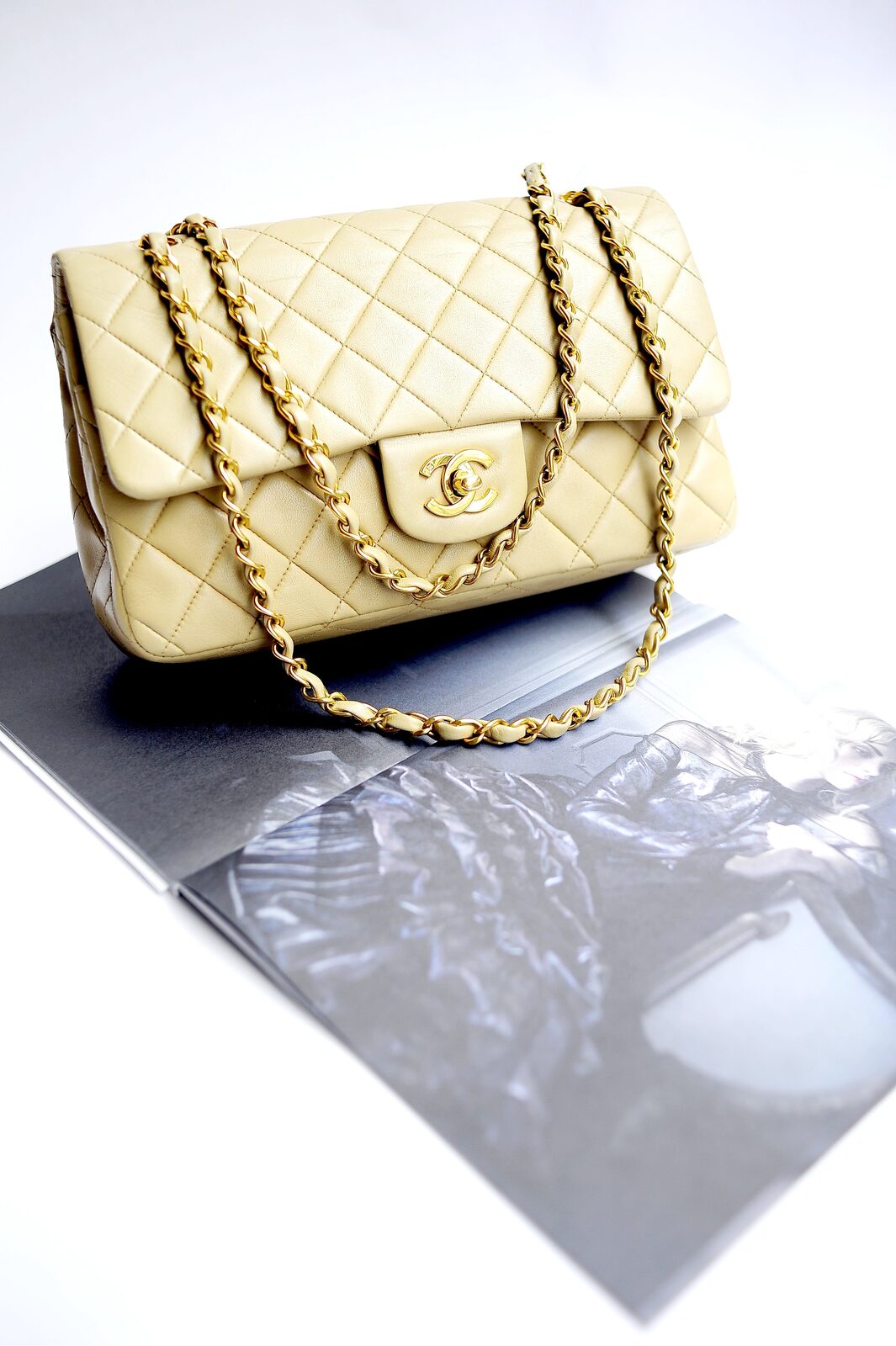
A Silhouette That Never Left
The Classic Flap has stayed in continuous production since its introduction, which is rare for a house that discontinues as readily as Chanel does. That continuity is part of why it resells so consistently: buyers know exactly what they're getting, and the silhouette hasn't been reinterpreted into something unrecognizable season to season.
What has changed, gradually, is the detailing — stitch density, the weight of the leather, the finish of the hardware. None of that is dramatic enough to call a redesign, but it's enough that two Classic Flaps ten years apart will feel different in the hand, even carrying the same name.
Reading the Sizes
The Classic Flap is generally sold across a few recognizable size tiers, from a compact Mini through Small, Medium, and the considerably larger Jumbo. The size naming isn't perfectly standardized across regions or across the bag's decades in production, so the safest way to confirm which size you're looking at is to measure the bag itself rather than rely on a label alone.
Size affects value in a straightforward way: the Medium has historically been the most fought-over size on the resale market, in part because it reads as the most versatile day-to-night option.
Lambskin vs. Caviar: The Leather Question
Lambskin is the softer, more delicate option — a fine, closely-grained leather with a slight sheen that gives the bag its classic, slouchy drape. It's also the leather that shows wear fastest: corner rubbing and surface marking are common even with careful use.
Caviar leather is a heavily textured, pebbled calfskin, treated to be significantly more scratch- and water-resistant than lambskin. It holds its structure better and is generally the safer choice for a bag used often. Neither leather is "better" — they suit different use patterns.
The leather tells you how a bag was used. The hardware tells you how it was stored. Read both before you trust either.
Our Authentication Team| Detail | Lambskin | Caviar |
|---|---|---|
| Texture | Fine, smooth, slight sheen | Heavily pebbled, matte |
| Structure | Soft, slouchy drape | Firm, holds shape well |
| Durability | Shows wear faster | Scratch and water resistant |
Hardware, the Turnlock, and Wear
The interlocking CC turnlock is the bag's signature closure, and its condition is one of the fastest tells of how a bag has actually been used and stored. Look closely at the turnlock, chain links, and corner protectors for brassing: a warm, yellowish undertone showing through the plating, usually starting at high-contact points.
The chain strap deserves the same scrutiny — leather cracking where it laces through the chain links is an area that takes constant flex stress and is easy to overlook.
What Actually Drives Resale Value
An authenticity card or hologram sticker, where the bag's production era included one, adds buyer confidence even though it isn't the sole determinant of authenticity. Discontinued colorways and hardware finishes tend to hold interest more than currently-in-production combinations, simply because they can't be bought new.
Overall structural integrity — does the bag still hold its shape when set down empty — is a condition factor buyers notice immediately, even before they look at the leather surface.
Frequently asked questions
Not inherently — value depends on condition, size, colour and hardware just as much as leather type.
No. Some production eras and sizes didn't include one, and cards can be misplaced without affecting the item itself.
Light, even brassing on high-contact points is common and generally treated as normal wear. Heavy or flaking brassing is a more significant condition issue.
Corner and edge wear can often be improved through professional restoration, though results vary by leather type.
Age itself isn't the driver — condition, size popularity, and whether the colorway/hardware combination is discontinued matter more.