 Contact Client Services via Whatsapp


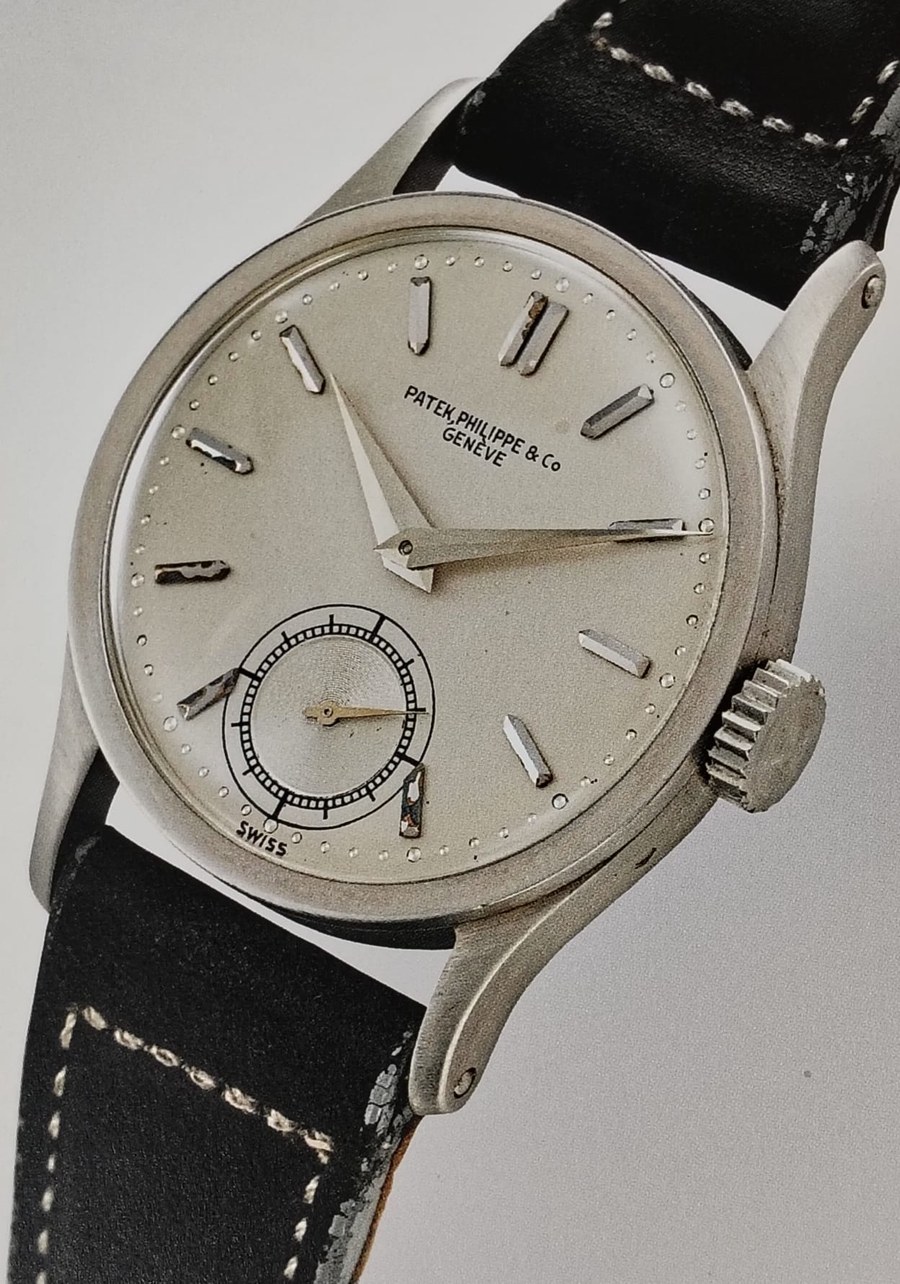
Why the Calatrava matters
Patek Philippe introduced the Calatrava in 1932 with reference 96: a round, plain, perfectly proportioned dress watch that has defined the type ever since. Every Calatrava since has been a variation on that idea — a round gold case, a clean dial and nothing that does not need to be there.
The 5119 is the Calatrava with the most recognisable decoration in the family: a bezel engraved with a fine grid of tiny pyramids, known as hobnail or Clous de Paris. It is quiet from across a room and remarkable up close, which is exactly what a Calatrava is supposed to be.
Reading the reference: 5119J
Patek Philippe references are read in two parts. The number, 5119, identifies the model. The letter after it identifies the case metal: J for yellow gold (jaune), R for rose gold and G for white gold. A full reference such as 5119J-001 adds a variant code for the dial.
So a 5119J is the hobnail Calatrava in 18K yellow gold. The same watch in rose or white gold carries the 5119R or 5119G reference, and the paperwork, case engravings and hallmarks should all agree with the letter.
| Detail | Calatrava 5119J |
|---|---|
| Case | 18K yellow gold, 36 mm |
| Bezel | Hobnail (Clous de Paris) engraving |
| Dial | White with black Roman numerals and small seconds at 6 o’clock |
| Movement | Calibre 215 PS, manual winding |
| Power reserve | About 44 hours |
| Water resistance | Rated to 30 m — splash resistant, not for swimming |
| Strap | Leather strap with a pin buckle |
The hobnail lineage
The hobnail Calatrava became a modern classic with reference 3919, introduced in 1985 at about 33.5 mm. The 5119 followed in the mid-2000s, keeping the same hobnail bezel, Roman-numeral dial and hand-wound calibre 215 PS, but in a slightly larger 36 mm case that suits contemporary wrists without losing the dress-watch proportions.
Sources differ on exactly when each metal was introduced and when the 5119 left the catalogue, so we describe a specific watch by what it is — its reference, its papers and its movement — rather than by a catalogue year we cannot confirm.
A Calatrava earns its reputation up close: in the depth of the hobnail, the crispness of the numerals and the finish of the movement.
The Fallen Archive Authentication Team- Hobnail pyramids that are crisp, even and sharp at every point around the bezel
- Clean, sharp dial printing and evenly applied numerals
- Gold hallmarks and case engravings that match the J reference
- A finely finished calibre 215 PS with the correct quality seal for its year
- Papers whose reference and numbers match the watch
- A softened or polished-down hobnail bezel, which affects value
- A dial that looks redone, with uneven printing or the wrong font
- Case, movement or paper numbers that do not agree
- An automatic movement or a date window — neither belongs in a 5119
Living with one
The 5119 is hand-wound: a few turns of the crown each morning keep it running, and winding it is part of the pleasure. Treat it as the dress watch it is — keep it away from water and knocks, and have it serviced by Patek Philippe or an authorised watchmaker at regular intervals.
Condition matters more than usual on a hobnail case. Heavy polishing rounds off the pyramids and cannot be undone, so an unpolished or carefully kept bezel is worth paying for. Original papers, and an Extract from the Archives if available, add confidence and value.
Frequently asked questions
Yellow gold. Patek Philippe uses J for yellow gold, R for rose gold and G for white gold.
No. It uses the hand-wound calibre 215 PS, so it needs winding by the crown.
No. It is rated to 30 metres, which means splash resistance, not swimming. Keep it dry.
Patek Philippe can issue an Extract from the Archives for its watches. Combined with an in-hand inspection, it is the strongest support for a watch’s story.