 Contact Client Services via Whatsapp


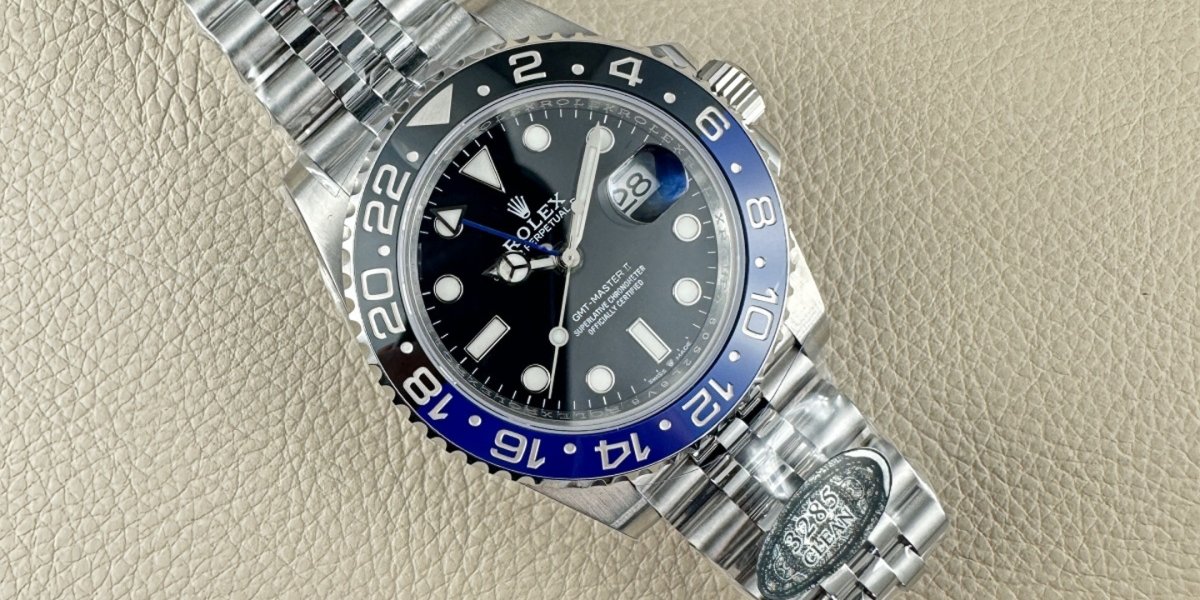
Weight and First Impression
Solid stainless steel (or gold) construction gives a genuine Rolex real heft for its size — noticeably heavier than most buyers expect on first pickup. This is one of the hardest things for a counterfeit to replicate cheaply, since matching genuine weight means using genuinely comparable materials, which erodes the entire cost advantage of making a fake in the first place.
It's a useful gut check, but not a complete test on its own: higher-end counterfeits have gotten better at approximating weight, so treat it as a first filter, not a final verdict.
The Cyclops Lens Test
Most date-displaying Rolex models use a small magnifying lens (the "Cyclops") over the date window, engineered to magnify the date by roughly 2.5x. On a genuine watch, the date should be easily, clearly legible through the lens at a glance. On many counterfeits, the magnification is noticeably weaker, or absent entirely, making the date harder to read than it should be.
This is a fast, no-equipment check that catches a surprising number of lower-effort fakes immediately.
A ticking second hand on a watch sold as mechanical is disqualifying by itself, no further inspection needed.
Our Authentication TeamThe Sweeping Second Hand
Every genuine mechanical Rolex uses an automatic movement, which moves the second hand in a smooth, continuous sweep rather than the distinct tick-tick-tick of a battery-powered quartz movement. This remains one of the single fastest, most reliable checks available: watch the second hand for a few seconds. A visible tick on a watch being sold as a genuine mechanical Rolex is disqualifying on its own.
Higher-end counterfeits now use mechanical movements too, specifically to defeat this test, so a smooth sweep confirms the movement type but doesn't by itself confirm the watch is genuine.
Text, Engravings and the Rehaut
Dial text on a genuine Rolex is crisp, precisely printed, and consistently spaced — look closely at the "Swiss Made" text at the bottom of the dial and the model text beneath the crown logo, both common weak points on fakes. Since roughly the mid-2000s, current production also laser-etches a repeating Rolex crown pattern and the watch's serial number around the rehaut, the inner bezel ring visible just inside the crystal. This etching is extremely fine and should be sharp, not blurry or inconsistently spaced, under magnification.
A watch represented as recent production that lacks this rehaut engraving, or shows a crude version of it, warrants closer scrutiny.
| Check | Genuine | Common Fake Tell |
|---|---|---|
| Second hand | Smooth continuous sweep | Visible quartz tick (lower-effort fakes) |
| Cyclops lens | Strong ~2.5x date magnification | Weak or no magnification |
| Rehaut engraving | Crisp, fine, evenly spaced | Blurry, crude, or missing |
| Weight | Noticeably heavy for its size | Suspiciously light |
What Even Convincing Fakes Still Get Wrong
The highest-grade counterfeits now pass most surface-level checks, which is precisely why in-hand professional inspection matters more than any single home test. Opening the case back to examine the movement itself — something a buyer generally shouldn't attempt without training, since it can damage a genuine watch's water resistance — is where the most reliable differences usually surface.
If a deal seems to offer a well-known reference at a price meaningfully below the going market rate, treat that gap itself as the first and strongest red flag, before you even get to the watch's physical details.
Frequently asked questions
It reliably catches lower-effort fakes using quartz movements. Higher-end counterfeits now use mechanical movements specifically to pass this test, so it should be combined with other checks.
We'd advise against it — incorrect reassembly can compromise the case seal and water resistance on a genuine watch. Leave this step to a professional.
No — a counterfeit can keep reasonably accurate time. Function tells you nothing definitive about authenticity on its own.
A price significantly below prevailing market value for that specific reference and condition — it's the first thing worth questioning.
A seller-provided certificate is only as trustworthy as the seller issuing it. Independent professional authentication carries more weight.