 Contact Client Services via Whatsapp


Two Different Eras, Two Systems
Chanel authentication advice online is confusing for one specific reason: the house changed its own system in late 2021, and a great deal of still-circulating advice was written for the old one. Treating every Chanel bag as if it should have a visible serial sticker — regardless of when it was made or purchased — is the single most common mistake we see buyers make.
The practical fix is simple: work out roughly when the bag entered circulation first, then judge it against the system that was actually in use at that time, not against whichever system you happen to be more familiar with.
The Serial Sticker Era
For decades, Chanel bags shipped with a numbered sticker placed inside a small interior pocket, paired with a matching authenticity card carrying the same number. The sticker format and card design changed gradually across the decades, so an inconsistent-looking sticker isn't automatically suspicious — but the number on the sticker and the number on the card should always match each other exactly.
A missing sticker on an older bag is worth noting but isn't disqualifying on its own: stickers were adhesive and could peel away over years of use, especially in humid climates. It's one data point, not a verdict by itself.
Judge the bag against the system that was actually in use when it was made, not the one you happen to know best.
Our Authentication TeamThe Modern Identification Chip
Starting with bags entering circulation from late 2021 onward, Chanel moved away from the visible sticker system to a small identification chip embedded discreetly inside the bag, read electronically rather than by eye. This means a genuine recent Chanel bag will not have the old-style visible serial sticker at all — its absence on a clearly recent bag is expected, not a red flag.
This transition is exactly why serial-sticker checks alone are an increasingly unreliable authentication method on their own: they only ever spoke to one era of the house's production, and that era has now closed.
Hardware and Stitching
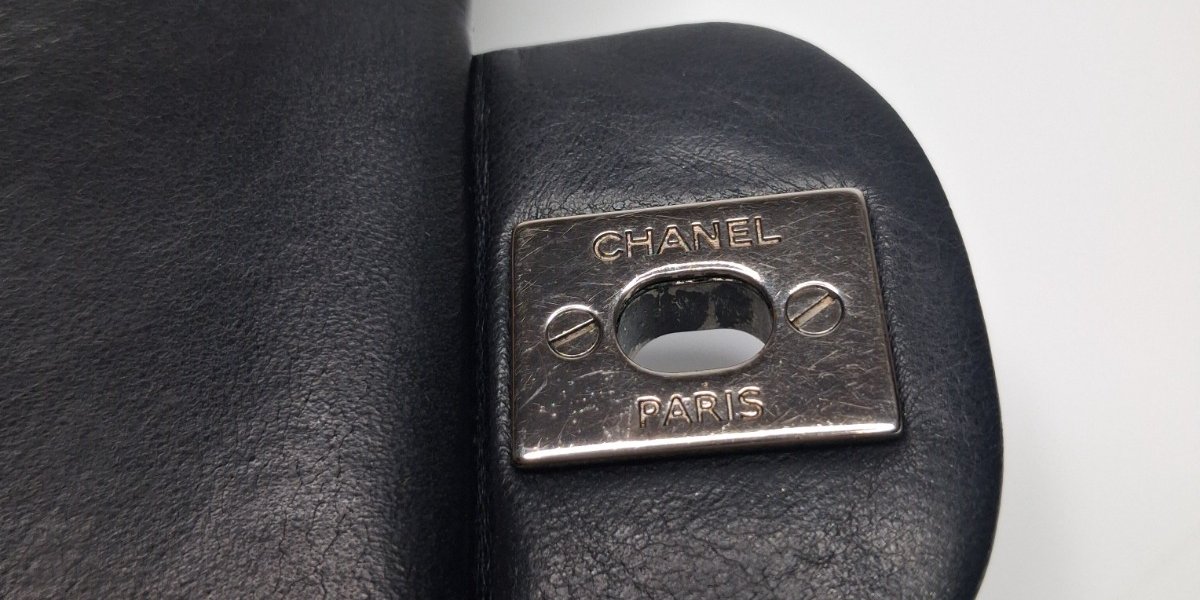
Regardless of era, hardware weight and finish quality are consistent tells. Genuine Chanel hardware has real heft to it and a cool, dense feel; lightweight or noticeably tinny-feeling hardware is a common giveaway on convincing-looking copies. The interlocking CC turnlock should close with a firm, precise action, not a loose or wobbly one.
Stitch count and evenness across the quilted diamond pattern is another reliable tell — genuine construction keeps stitch spacing remarkably consistent across the entire bag, while copies frequently show subtle variation as the stitching moves around curves and corners.
Interior Construction
The interior lining material, its stitched-in brand markings, and the finish of the interior pocket zipper are all worth close inspection. Genuine construction keeps interior finishing to nearly the same standard as the exterior; a rougher, less finished interior relative to a polished exterior is a common inconsistency on copies.
When in doubt on any of these individual signals, the honest answer is that no single detail is fully conclusive by itself — professional authentication considers all of them together, in person.
Frequently asked questions
Not necessarily. Bags made from late 2021 onward use a hidden chip instead of a visible sticker, and older bags can lose their sticker over time. Absence alone isn't conclusive either way.
Yes — on bags from the sticker era, any mismatch between the sticker and its accompanying card is a significant red flag.
Not practically — reading it requires equipment most buyers don't have. Professional authentication services are set up to verify it.
Yes — it's one of the more reliable tactile tells across both eras, since it's expensive and difficult for copies to replicate convincingly.
Treat it as a starting point to verify, not as fact — cross-check it against the specific authentication markers appropriate to that claimed era.